
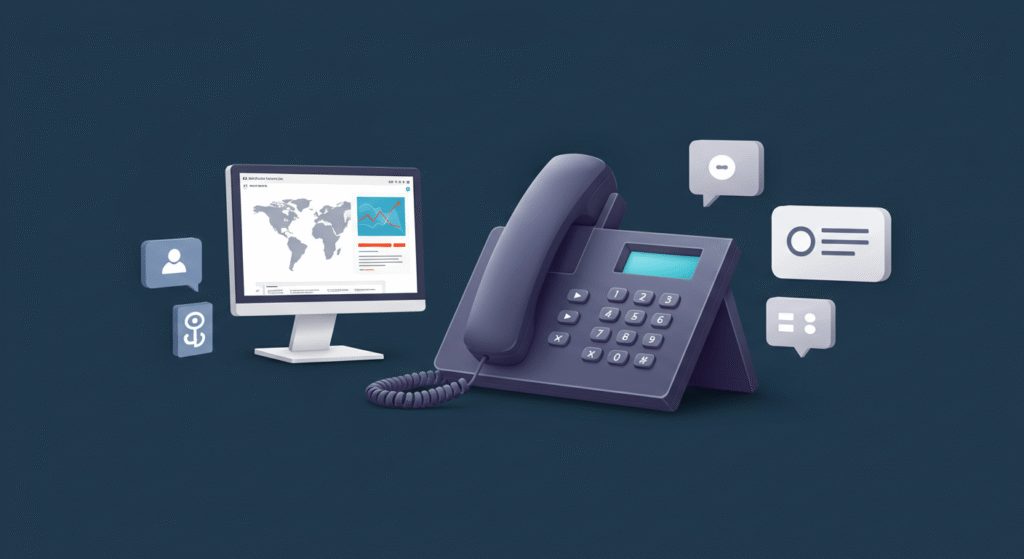
If your business still pays line rental on a BT landline, uses ISDN, or has an old phone system sitting in a comms cupboard, the clock is running. Openreach has set 31 January 2027 as the final date to move lines off the old copper telephone network. After that, the traditional phone services that many small businesses have relied on for decades will no longer be available in the normal way.
This guide explains what is happening, who it affects, and the practical steps to take now so the switch happens on your terms rather than in a rush next January.
What is the PSTN switch-off?
PSTN stands for Public Switched Telephone Network. It is the copper wire network that has carried phone calls across the UK since the Victorian era. ISDN, the digital service many offices use to run several lines at once, sits on the same infrastructure.
Both are being retired. The replacement is calling over an internet connection, usually called VoIP (Voice over Internet Protocol). For a business, that normally means a hosted phone system or SIP trunks connected to an existing phone system.
The switch-off has been coming for years. The original target was the end of 2025, and it was pushed back to give people more time. Openreach has now confirmed the final dates, and there is no sign of a further extension.
The key dates
- 31 January 2027 is the last date to place migration orders.
- From 1 February 2027, lines that have not moved go onto a temporary emergency voice service. It is limited, more expensive than a modern phone system, and only intended as a safety net.
- 31 March 2027 is the cut-off after which outstanding migration orders are cancelled.
In practice, that means the comfortable window for planning a move is the next few months. Engineers, number transfers and installers will all get busier as the deadline approaches.
Does it affect your business?
Almost certainly, if any of these are true:
- You pay line rental for a traditional landline from BT or another provider.
- Your office has ISDN2 or ISDN30 lines.
- You have an on-site phone system that connects to the outside world over copper lines.
- You have an alarm, lift emergency phone, door entry system, franking machine, fax or card terminal that uses a phone line.
The last group is the one that catches people out. These devices often sit on a line that nobody in the office thinks about, and they can stop working when the copper is switched off. We have written a separate guide on alarms, lift lines and card machines after the switch-off.
If you already use a hosted phone system, Microsoft Teams calling, or SIP trunks, your calls are not affected. It is still worth checking for those forgotten lines.
Five steps to take now
1. Find every line you pay for
Pull your last few phone bills and list every number and line. Many businesses discover lines they have been paying for years that nothing is connected to. Those can simply be cancelled.
2. Work out what is on each line
For every line, find out what uses it. Main numbers and direct dials are obvious. Alarm panels, lift phones and card machines are not. If in doubt, an engineer can trace them.
3. Check your broadband
Calls will run over your internet connection, so it needs to be reliable. Most business broadband handles a small office’s calls comfortably, but it is worth checking before you move. If your broadband currently runs on a copper phone line, that will also need to move to a fibre-based service.
4. Decide what you want from your phones
This is the part most businesses skip, and it is the most valuable. Moving off a landline is a chance to get features that were never possible before: calls on your mobile, voicemail to email, call recording, proper call queues. Our post on what you gain when you leave your landline goes through them.
5. Book the move
Choose a provider, agree a date, and transfer your numbers. You keep your existing numbers, so customers will not notice anything other than calls being answered better.
What does it cost?
For most small offices, moving is cheaper each month than what they pay now. Traditional line rental plus call charges adds up, especially across several lines. A hosted system replaces all of it with a simple per-user price.
With us, that is £15 per user per month for the system, hosting, management and support, with free setup and number transfer. Desk phones are optional, because many people now use the mobile and desktop apps instead. You can read more about our business phone systems.
What happens if you do nothing?
Your lines will not simply go dead on 1 February 2027. Openreach will move unmigrated lines onto its emergency service. But that service is temporary, costs more, and gives you none of the benefits of a modern system. Some devices on those lines may also stop working. It is far better to plan the move now than to deal with it after something has broken.
Common questions
Will I lose my phone numbers?
No. Your existing numbers are transferred to your new system.
Do I need new handsets?
Sometimes. Many businesses mix desk phones with mobile and desktop apps. A provider should tell you which of your current phones can be reused.
Is it disruptive?
It should not be. The new system is set up and tested first, then the numbers are moved over on an agreed date.
What if I have an old phone system I like?
You can often keep it and connect it with SIP trunks instead of ISDN. See our guide to ISDN replacement options.
Not sure where to start?
We will check your lines for free and tell you exactly what needs to move before January 2027, in plain English, on the first call.